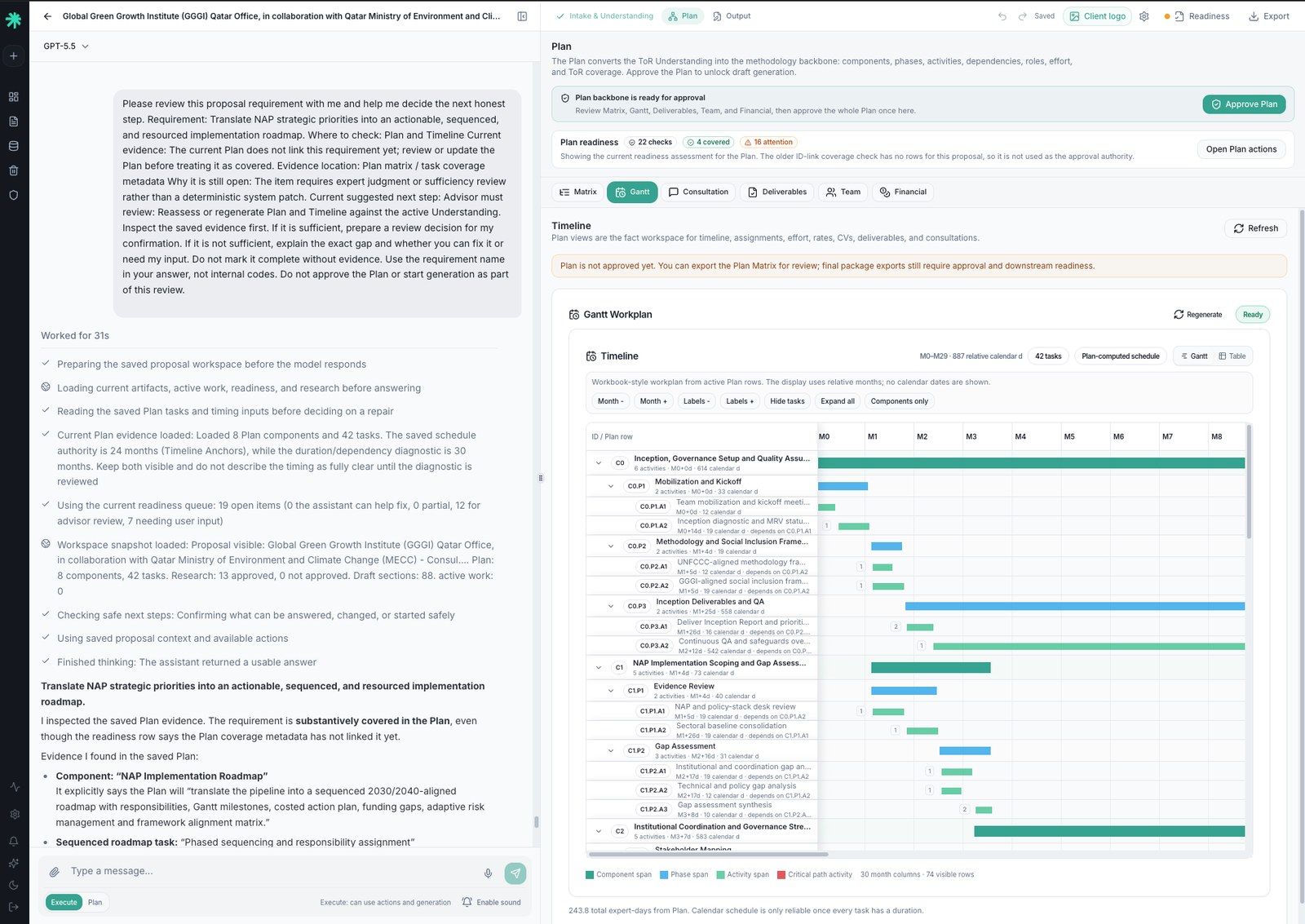
A proposal workspace that connects tender requirements, source evidence, methodology, team information and draft deliverables, with expert review throughout.
Pilot / in developmentAbdallah Al Ashqar · AI workflow and product architecture, development
A proposal is a chain of decisions.
The challenge
A technical proposal has to make several things agree: what the tender asks for, the approach being proposed, the team available to deliver it, the effort involved and the evidence behind each claim. These inputs arrive in different documents and change during preparation. A convincing draft can still be incomplete if those relationships are lost.
The approach
Ampere organizes proposal development around a shared, structured understanding of the tender. Research and internal knowledge inform the methodology; the plan informs the draft, team requirements and financial assumptions. Expert review is built into that sequence. The architecture also accounts for missing inputs and for downstream work that needs review when an earlier decision changes.
The work
Tender interpretation and a versioned requirements register
Document processing, research and evidence retrieval
Methodology, plan and timeline development
Proposal drafting, team/CV evidence and financial assumptions
Readiness checks, dependency handling and document exports
The proposal logic
Keep the reasoning connected to the evidence.
01 / Establish what is required
One understanding of the tender.
Terms of reference, supporting documents and clarifications become a structured understanding of the assignment. A requirements register gives the team a common basis for checking what the response must cover.
Missing source material remains an input to resolve. It cannot be replaced by a confident sentence in the draft.
02 / Shape a deliverable approach
Connect the method to the plan.
External research and internal knowledge inform the proposed components, methods and tasks. Expert review then tests that structure before it develops into a methodology, timeline and written response.
The important artifact is the agreed approach, which gives the draft, team requirements and effort assumptions a shared basis.
03 / Handle change explicitly
An earlier change can affect later work.
The architecture tracks requirements, versions and dependencies across proposal artifacts. When source interpretations or plans change, readiness checks can identify downstream material that needs attention.
Document generation is one stage. Keeping the supporting evidence and decisions consistent is the larger engineering problem.
The product architecture
Three decisions before a proposal leaves the workspace.
The original phase-one map separates research and drafting from expert approval. Review the component map first, the detailed methods next, and the assembled text before formatting and export.
Original phase-one architecture from the Samim capabilities presentation. It records the intended operating model; the later development work expands the requirements, readiness and supporting-document layers.
Is the structure right?
Check that the proposed components address the tender deliverables and that their dependencies make sense before detailing the work.
Can this approach be delivered?
Review the methods and tasks, then refine the details that the next drafting stage will use.
Does the text represent the agreed approach?
Review and approve the assembled proposal text before producing the submission documents.
Beyond the main document
The documented scope extends to the proposal package: technical response, plan matrix, team and CV material, and a financial offer based on available rates and effort assumptions. These artifacts draw on shared project information while retaining their own evidence and review needs.
Source documents, expert profiles and client inputs matter as much as generated text. The system is designed to expose missing information and support review before export.
Project stage
Ampere is presented here as a pilot under continued development. The interface and phase-one diagram are archived project evidence. Client acceptance and measured time savings are not claimed.
Development checkpoints
How the work evolved.
Selected checkpoints from archived project meeting notes.
25 February 2026
Clarifying the proposal workflow
The project review separates an early concept note from a technical proposal, and discusses how services, project knowledge and expert profiles should support both. The emphasis is on making the underlying relationships explicit.
5 March 2026
Strengthening the source material
The following review focuses on file processing, library tagging and reliable extraction from expert, tender and reference documents. These notes record development priorities; proposed next steps are not presented as a completed release.